Buddha Magic - Online Buddhist Occult Ezine and Ebook shop

Buddha Magic Ezine  Thai Buddhism Blog  Readers Reviews   


Buddha Magic - an online Ezine and Ezine Shop for Thai Buddhist Occultism and Mysticism - The role of Magic in Thai Buddhism, and its Brahman and Animistic roots - Por Gae Ruesi, Ritual Paraphernalia, Sak Yant and the sacred geometry of Yantra, Lek Lai, Monk Biographies, Thai Buddhist Amulets, Amulet Making, Pasa Khom, Magic Spells, Buddhist Prayers, How to make Bucha, Bucha Statues and Buddhist Art and Sculpture. Amulet Hunting service available

View or Purchase 'Buddha Magic Ezine' Here >>>>>

February 9, 2011

Anatomical features of a Buddha or Deity statue - Buddha Magic 4 - free preview

Filed under: Buddhist Art, Freebies and Previews — Tags: , , — Sakyant @ 4:56 pm

Official Names for Anatomical features of a Buddha or a Buddha statue

Buddha-Magic
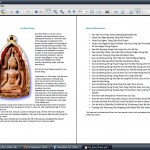
Buddha Magic Issue 4 free preview
For Images of the Lord Buddha, or any Buddha for that matter, as well as many Higher Deities, it is inappropriate to use the normal Vocabulary of words for anatomical parts in Thailand. There is a separate Compendium of words specifically assigned for using when referring to parts of the Anatomy of the Lord Buddha, a Buddha or Deity statue, and even members of Thai Royalty. I have compiled a Phonetic transcription of some of the main words needed to speak about the parts of a Buddha statue or amulet politely and according to Thai Tradition. A couple are yet to be finished, which will be added later.

Here is a List of some of them for you to practice and learn, in order to enable your conversation about Buddhist Imagery and amulets to be fitting.

พระโอษฐ์ Pra Oat = Lips, Mouth
พระเกศา พระเกศ,พระศก,เส้นพระเจ้า  Pra Gaesaa, Pra Gaes, Pra Sok, Sen Prajao = Hair
พระฉวี  Pra Chwee = Body Skin
พระราศรี Pra Ra Sri = Face Skin
พระวรกาย,พระสรรภาง,อินทรีย์  Pra Wora Gaay, Pra Sanpangk, Intsee = Body
ช่องพระนาสา  Chong Pra Nasaa = Nostrils
พระจุไร  Pra Jurai =
ไรพระเกศา  Rai Pra Gaesaa =
พระอังคาพยพ Pra Ongkaapayop = Body Parts
พระนหาร Pra Naharn = Tendon, Cartilage
พระมัสสุ  Pra Massu = Beard
หลังพระเนตร Hlang Pra Naedtr = Eyelids
หลังพระบาท  Hlang Prabaat = Foot Arch
พระเศียร  Pra Siarn = Head
พระมาลา Pra Mala = Hat/Crown/Head-dress
ไรพระศก Rai Prasok =
พระโมลี-พระเมาลี Pra Molee, Pra Maulee =
พระนลาฎ Pra Nalaadt = Forehead
พระขนง พระภมู Pra Khanong, Pra Pamuu = Eyebrows
พระอุณาโลม  Pra Unalome = hair between eyebrows
พระเนตร,พระจักษุ Pra Naedtr, Pra Jagsu = Eyes
ขอบพระเนตร  Khorb Pra Naedt = rims of eyelids
พระนาสิก-พระนาสา Pra Naasig, Pra Nasaa = Nose
พระปราง Pra Bpraang = Cheeks
พระกำโบล Pra Gam Bol = Jowls
พระหนุ  Pra Hanu = Chin
พระกรรณ Pra Gan = Ears, Earlobes
ช่องพระกรรณ  Chong Pra Gan = Eardrum
พระโสต Pra Soadt (pronounce as in ‘boat’) = Eardrum
พระพักตร์ Pra Paktr = Face
พระศอ Pra Sor = Throat
พระแสงPra Saeng = Weapon
พระบาท Pra Bpaat = Feet/Foot
พระกรรเจียก Pra Gan Jiag =
พระอังสา Pra Angsa = Shoulder
พระอังสกุฎ  Pra Angsagut = Jangoy Ba
พระพาหา-พระพาหุ Pra Paahaa/Pra Paahu = Bicep
พระกร Pra Gorn = Fore-Arms
พระกัปประ Pra Gabp-Bpra = Elbow
พระหัตถ์ Pra Hadth = Hands
ข้อพระกร-ข้อพระหัตถ์ Khor Pra Gorn =  Wrists
พระหัตถ์ Fhaa Pra Hadth = Palms of Hands
ฝ่า พระองคุลี-นิ้วพระหัตถ์ Pra Ongkulee/Niw Prahadth = Fingers
พระอังคุฐ  Pra Angkut = Thumb
พระดัชนี  Pra Dachanee = First Finger
พระมิชฌิกา Pra Mich-chigaa = Middle Finger
พระอนามิกา Pra Anaamigaa = Ring Finger
พระกษิฐา  Pra Gasithaa = Little Finger
พระนขาPra Nakhaa = Finger Nails
พระอุร-พระทรวง  Pra Ura/Pra Sruang = Chest
พระถัน-พระเต้า Pra Than/Pra Thao = Breast/Nipples
พระกัจฉะ ว่างพระพาหา Pra Gacha Hwang/Pra Paahaa = Armpits
พระอุทร  Pra Utorn = Stomach
พระนาภี Pra Napee = Navel
พระกฤษฎี-บั้นพระองค์  Pra Gritsadee Bpan Pra Ongk = Waist
พระปรัศว์ Pra Bprasw =
พระปฤษฎางค์-พระขนอง Pra Bparuetsadtangk/Pra Khanong = Back
ระอังสกุฎ Pra Angsagudt =
พระฉายาPra Chaayaa = Shadow
พระโสณี  Pra Sonee = Hips
พระที่นั่ง,ที่นั่งทับ Pra Ti Nang/Tee Nang Tap
พระอุระ Pra Ura = Thighs
พระเพลา Pra Paelaa = Lap?
พระชานุ Pra Chaanu = Knees
พระชงฆ์ Pra Chongk = Thai Muscle
หลังพระชงฆ์ Hlang Pra Chongk =
พระโคปยกะ  Pra Kobpayaga =
ข้อพระบาท Khor Pra Baat = Ankles
พระปราษณี Pra Bprasnee = Heels
พระโลมา Pra Lomaa = Body Hair
พระมังสาPra Mangsaa = Flesh/Muscle
พระตจะ Pra Dtaja = Skin
พระหทัย-พระกมล Pra Hatay/Pra Gamol = Heart
พระกุณฑล Pra Gundol = Ear Rings
พระสะพัก Pra Sapak = Robes, bags
พระโลมะจักษุ  Pra Somajagsu = Eyelashes

This article is a free short preview Issue 4 of Buddha Magic Ezine.

I will be publishing a small peep at a part of the grand Article on The Duryataep Deities and the use of Masks in Wai Kroo Ceremonies in the Preview Slideshow here below, which also features some sneak previews of the Yant Duang Pichai Somgkram story and the Biographies of two sak yant monks; Luang Por Pratueang and Luang Por Guay, as well as featuring their surviving Looksit and their work..

A useful and practical article on hos to use different numbers of Incence sticks for praying to different Deities, as well as the correct way to pray to the Triple Gem, and the symbolism of the Altar offerings.
The Pra Somdej amulet and Somdej Pra Puttajarn Dto prohmrangsri legends will continue as usual in issue 4, and a story about the Yaksa (Asura) Deities will also hopefuly be included. The above article on Buddha’s anatomical body parts is a free tester from within the pages of Buddha Magic Issue 4, which is the first of two free previews which will be given for this issue. The other preview is the article on the Wicha Sak yant of Luang Por Guay, which you can find and read on the blog section of the sak-yant.com homepage.

January 6, 2011

The correct practice of Dhana

Filed under: Uncategorized — Tags: , — Sakyant @ 4:39 pm

Making Merit through Donation - Practicing Dhana - Generosity and dedication of the Fruits of Merits

When we make donation (Dhana - practice generosity) it is ‘good karma’ or better said, is the cause of auspicious things to come back to us

5385611

But when we practice Generosity, we should also dedicate the ‘rewards’ (fruits) of our Merits, to the Buddha Dhamma and Sangha, our Mother father and Teachers, the Angel who watches over us, and ‘Jao Gam Nai Wen’ - the Agent of Karma (the energy of all the beings we have wronged in this and past lives), as well as dedicate to all friends relatives, enemies, animals, asuras, deities, hungry ghosts etc - this is to increase ones fortune tenfold because by offering the fruits of ones good deeds to those we have done wrong or harmed in the past, will make the Lord of Karma let go and the beasts, the shadows which are following us waiting to trip us up in life (the agent of karma - the spirits of those we wronged), those beasts will stop perching on our shoulders or hanging in the shadows behind us, following.

The bad luck and many things come from the ‘Jao Gam Nai Wen’ (the agent of Karma - our victims of the past) - in order to increase ones luck and auspicious life, one must dedicate the fruits of Merits to the Jao Gam Nai Wen.

This is one reason to make Merit, to clean one’s inauspicious fate and horoscope. This effect of increasing the Auspiciousness of ones Astrological and Karmic Enviroment is called ‘Serm Duang’ in Thai. This is why Thai Buddhist Amulets which depict the Buddha himself are classed as possessing ‘Serm Duang’ qualities, because, when we wear an image of Lord Buddha, it reminds us to practice well, and keep the precepts. This causes our Karma and Horoscope to improve. This is the ‘Serm Duang Effect’ which is classed as magical in Thailand, and which perhaps is precisely that. The results will prove this if you practice Dhana properly and observe the changes as they gradually come to fruition from these Auspicious causes you will be creating by correctly dedicating the Fruits of your Merits and generosity practice to all Beings. And in doing this, never forgetting to include those we have created Enmity with.

This is a way of beginning to put an end to the Inauspicious karmic actions we have made, and to appease the spirits of those we have wronged, as well as our own subconscious, with the Fruits of the Merits we make and then offer to them, to help carry them out of their predicaments. If we do this truly in our heart of hearts, the Fruits of those Merits shall become Manyfold.

December 19, 2010

Buddha Magic 3 - Free Preview

Filed under: Freebies and Previews — Tags: — Sakyant @ 2:15 am

Presenting you with some screen-shots of Buddha Magics third Issue, which will be out around Christmas time. Have a peek at whats in this issue, and hopefully support the project by subscribing to the E-Zine on the Buddha Magic Ezine Portal

Buddha Magic Issue Three Previews

Hope it looks as interesting as it is for me to document. Please support this project so we have enough readership to continue the Sak Yant Foundation Project and keep Buddha Magic Publications alive. Its a One man show still, and the work is more than the rewards provided. Please help by sharing about the publication on your social networks and by telling friends. The more readers Buddha magic has, the better i can document the stories and provide quality content with accurate information for anthropologists, practicing occultists, and Spiritually minded lovers of Thai Culture and Theravada Buddhism in Thailand to enjoy and use for their research.

Buddha Magic 2

$13.99

Buddha Magic E-zine #1

$12.00

December 6, 2010

The Benefits of Chanting Pra Kata

Filed under: Freebies and Previews, Kata Chanting — Tags: — Sakyant @ 5:53 pm

About Kata Chanting – The Benefits of Chanting Pra Kata (Ghata in Sanskrit - Kata in Thai)

Chanting is an essential part of the Thai Theravada Buddhist Practice. The blessings and benefits of Chanting Kata are evident in various aspects of life. The Buddha himself stated that there are 5 ways to enlighten to any Dhamma or to become fully enlightened, and that one of them was whilst Praying, or Chanting Prayers.

Apart from this, Chanting Kata will increase your focus and concentration and is a form of Samadhi, as well as Iryapata (Iryaabot in Thai), meaning to be mindful of ones bodily movements as well as to control ones diligence, being diligent includes making the effort to not be lazy and to chant Pra Kata Prayers as part of your accumulation of Baramee and Merit. The Buddha taught there are various ways to accumulate merit. The supreme way is to develop Panya (wisdom insight mind) and Purify the Heart from desires, but this is a difficult and long path, which requires a lot of strength. So, in order to develop that strength, we should accumulate Baramee through the other ways of accumulation of Merit such as Dhana (Taan in Thai - the practice of Generosity – giving alms to Monks and other good causes, poor people.

Kata Chanting can even be used to attain Psychic powers if the right level of concentration and breath control is applied with sufficient effort.

The Blessings of Chanting Kata are multiple, including;
Pra Kata are sacred Suttas and Dhammas which come directly from the Lord Buddha, and is the pleasure of Deities and Gods to come and Listen (In Thai Evening Prayers, there is even one Kata which calls the Deities to come and listen to the Dhamma, before the Prayers begin). The Deities will love and protect those who sing the Psalms of the Dhamma.
Pra Kata is a form of self Purification and contemplation of the Dhamma, andf thus is both a case for the eventual Liberation from Suffering of the Practitioner, and also a cause of Metta Mahaniyom charm which will arise within the Aura of the person who chants with Faith and Respect towards the Triple Gem.
The Mind and Heart of the person who Chants Pra Kata regularly and with a Pure Heart, will feel light and unstressed, Happy and Radiant. Illnesses will not befall you often, only when it is part of your ‘Wibaak Gam’ (Culmination of Previous Causes which are now leading to Negative results, due to one’s own actions in the Past or Previous Lifetimes). Karma can not be avoided, but it can be lightened as far as the way we take our Karma is concerned. Pra Kata can help us in this too, if we study and take time to understand a little of what our Kata Mean and are talking about.

Lets take the famous Funeral Chantiing of Thai theravada Monks for example know commonly as ‘Suad Phii’ and officially called ‘Suad Pra Apitam);
Thai Folk in General call this Suad Phii because it means ‘Chant to the Ghosts’ or ‘Chant for the Dead’. I have often heard many an Abbot of Temples complain how in Thailand people think that this Kata is something for the dead to listen to, for in Truth, it is not at all. It is a teaching which the Buddha once gave to lighten the burden on the hearts of the Relatives who were left behind to suffer the Loss. The Kata explains how Life is not Permanent and subject to Change and Entropy. It teaches to accept that even we our self must Die and wither and fade, and so why should we be so sad for others, when even we ourselves will be going the same way indeed.

This post is a free to read excerpt from a Longer Chapter on Pra Kata Chanting with a large collection of Kata for your Practice which is included in the Upcoming Issue Three of Buddha Magic Ezine. The Manuscript is just one Chapter in an ongoing Series which will be published sporadically in Buddha Magic Ezine. Once completed, all the Chapters will be reassembled into one Book specifically dealing with Kata Chanting, Which will come on CD with sound files for Pronunciation.

Another Project i am now Practicing with the thought of developing a you tube channel for teaching many aspects of Buddha Magic, is Video Tutorials. I just Made my first Attempt with Windows Movie Maker, but wish to obtain Adobe Premier in order to start making professional video Tutorials to teach Kata Chanting, How to Bow in Temples, Khom Sanskrit, and Sak Yant and Modern Tattooing methods, as well as some other ideas i have which i am not yet prepared to tell about.

You can View my first Video Kata Tutorial attempt here - there is also a useful Synopsis and written phonetics.
Kata Bucha Pra Prohm (Kata to revere Brahma)

See all Our Ruesi Amulets - on Thailand Amulets.Net - keep checking back to see new additions as our collection of Thai Amulets grows.

November 5, 2010

Eight Eras of Thai Buddhist Sculpture

Filed under: Buddhist Art, Freebies and Previews — Tags: — Sakyant @ 5:37 pm

This months issue (Issue Two) of Buddha Magic Ezine has issued the preview for free download.
This Months freebie is the introduction of the multi part series on the Eight Historical Eras which influenced the Artistic interpretation of Thai Buddhist and Brahman Art and Sculpture. You can download and preview this piece of content of Issue two of Buddha Magic Ezine by using the below download button - right click over the download symbol and select ‘Save as’. You will then be able to download the pdf e-publication to your PC. If you cant read it, then download adobe reader for free or foxit reader, and you will be able to read the pdf file.

Download the Preview of Buddha Magic Issue two - Intro article to the series on eight historical eras of Thai Buddhist Sculpture and Art

Download the Preview of Buddha Magic Issue two - Intro article to the series on eight historical eras of Thai Buddhist Sculpture and Art

Download - Eight Eras of Thai Buddhist Art and Sculpture - 11 page preview article from Buddha Magic Ezine Issue 2

October 31, 2010

Bpalad Khig - Palad Khik - Penis Amulet

Filed under: Amulets — Tags: , , , , — Sakyant @ 12:48 am

There is one kind of ‘Krueang Rang’ (Magic amulet) in Thai Saiyasart, which stands out in particular for its eye catching shape. I am speaking of course, of the Bpalad Khig (alternatively spelled as ‘Palad Khik’). Bpalad Khig is an Animistic Phallic amulet, carved in the form of a penis. Bpalad Khig are made in all sizes, ranging from miniature ones the size of your little finger, right up to ones which are higher than a human. Bpalad Khig are extremely popular with Thai people, worn as amulets tied to a cord around their waist. The belief in the Lingam, or ‘Lingk’ (Thai pronunciation) phallic energy, is derived from the Brahman influence which has been inflected on Thai Theravada Buddhism since both belief systems came to Siam more than one or two thousand years ago. It is believed that the Lingam energy is the source of all life forms in the Universe. This is the root of the act of reverence (Bucha/Poojah) to the Shiva Lingam , which honors Shiva as the Lord of the World. Brahmanism is a living part of Thai Buddhist ceremonial practice, and the revering of Deities from the Brahman Hinduistic Pantheon is commonplace. The Buddha in fact, did not deny the existence of these Deities and merely explained that even Deities are not exempt from Karma and must surrender to impermanence and some day extinguish and accept cessation.

For this reason, such Deities can offer us no permanent refuge, or escape from the endless cycle of rebirth that is Paticcasamuphada. Despite this, it is arguable that such Deities can perhaps offer us help in finding solutions to some of our worldly problems, if not at least to gain some peace of mind, or even hope for the future. The act of making offerings and praying to Deities is as popular now as it was a thousand years ago, which indicates that people seem to believe that it brings results. It is sure that those who have true faith and see the positive things, looking away from the negative thought processes, and believe and revere their Deities, following the precepts given, will see noticeable rewards and benefits/blessings arise from their efforts. Amulets are not meant to relieve us of our duty in working to rear our families or to get out of having to do ones job, rather hey are there to remind us and help us in keeping up our morale and effort to live the correct way and to make merits, and honor the amulet in the way it should be done, by taking on our daily tasks and chores and fulfilling all that is required of us with full heartedness. Then the amulet will bring us the luck and fortune, happiness and health which we asked it for. In India, not only is the Shiva Lingam worshiped, bit there exists also a cult which reveres the female sex organ, which is called the ‘Yoni’. The same thought is applied as that used too revere the Shiva Lingam, that is to say, that all created things must spring out of the Yoni instead of the Lingam.

The practice of ‘Bucha Siwalingk’ (praying to Shiva Lingam phallic Deity) entered Siam with the influence of the Khom race, whose language and alphabet the Thais absorbed and adapted into their own personalized fashion. Some have said that the integration of Pre-Buddhist beliefs and traditions into the Thai Theravada Buddhist practice of the common Folk is not in contradiction to the practice of Buddhism and presents no obstacles.

In fact it is believed that since Buddhism sprang out of the roots of Brahman Cosmology, and that the people of Siam adopted Pre-Buddhist Brahman traditions and incorporated them, that this is even a benefit to the preservation of ancient knowledge, and of Thai history and tradition. Most of these ceremonies do not come into any kind of dispute with Buddhist thought, such as the ceremony of Bucha B

Carved Bone Palad Khig amulet - Luang Phu Hluea Chalidto, Wat Tham Mai Nuea (Uttaradit)

n the Isan country, Bpalad Khig is sometimes also called ‘Bak Ben’, or ‘Khun Phet’. Bpalad Khig has been used by Isan people to ward off dark magic, for example in a case about 2548, the Folk of Roi Et were afraid of ‘Phii Mae Hmaay’ ( a female ghost who hunts men), so they erected a massive totem pole in the shape of a penis, with the initials (S and Y) of the man they believed to be the target of the ghost. They placed the giant Bpalad Khig in front of the mans house. Over the years, many rumors and legends of Bpalad Khig performing miracles of Kong Grapan Klaew Klaad magic and other protective spells, the popularity and demand for such talismanic charms increased, to the point where locals would flock to the various Gaeji Ajarn around the country who made these amulets. The Bpalad Khig was here to stay. When the Gaeji Ajarn would make Bpalad Khig, they would have learned and researched the correct creation methods and ritual process to empower the amulets, in addition choosing auspicious and magical kinds of trees for the wood used to carve them out of. They would then inscribe sacred Khom Agkhara and make incantations of Kata to increase the magical charge and the strength of faith the devotee would have in such an amulet. The Bpalad Khig began to be used as a portable amulet through being carved from wood which was from the Cassiafistula Linn variety of tree, which has medicinal or healing properties. Ancient Folk would then use this when traveling cross country; If they had to drink water from a stream, or other natural source which may have bacteria or dangerous amoebas, they would take the Bpalad Khig and use it to stir the water before drinking it, to remove any danger of illness. Bpalad Khig is not only applied for preventing dangers and illness, but is seen to possess all other kinds of magical properties, such as Metta Mahaniyom (preference and popularity, friendliness and love, compassion,receiving generosity and mercy), Choke Laap (luck and fortune), good salesmanship, Love charm, and the like.

Palad Paya Mai Ngiw Dam - Por Tan Khiaw, Wat Huay Ngo (Pattani)

The word Bpalad, means ‘vice’ (as in ‘vice President, vice Mayor, etc). This has caused the Bpalad Khig to make some people t exclaim jokingly “why don’t you call it ‘Vice Mayor Khig’?. In fact, the word ‘Bpalad’ is derived from the Sanskrit ‘Bprasawa’, which translates as “he who stands by the side of’. This was adapted into the Thai language as Sanskrit and Buddhism entered and flourished in Siam. This is why in Thailand, an assistant to the Mayor (Nay Ampher), is called ‘Bpalad Ampher’. But the real reason this word (Bpalad) is used for the Shiva Lingam amulet, is that it is worn as a companion to remain by the side of the wearer (’he who stands by the side of’). Devotees of the Bpalad Khig tend to wear it outside of their clothes, around the neck, waist or sometimes hanging inside the trousers against their loins. The word Bpalad Khig (”ปลัดขิก” -low sound) was originally pronounced ‘Bpalad Kig’ (”ปลัดคิก” - rising sound) in ancient times.
Many ancient Thai masters and amulet makers were inclined to making Bpalad Khig amulets, which were extremely popular with the Folk. Some had Khom Agkhara lettering, such as “U A Ma’ or ‘Om’, which are psalms to Brahma, Shiva and Vishnu. Some Ajarn would inscribe Sanskrit Agkhara instead, in Brahman tradition. Some of the most famous Gaeji Ajarn master monks who made Bpalad Khig amulets were; Hlwong Por Hluea, (Wat saw Changoke), and Hlwong Phu Ee (Wat Sattahib). Even though todays age of technology has brought many things to distract us from magic, the Bpalad Khig is still an extremely widespread belief and is worn by Thai people in all provinces. Hang around any Samnak sak or Samnak Ruesi for a while and you will most definitely see someone wearing a Bpalad Khig amulet. These days, The Bpalad Khig seems to have become extremely specialized and is made by various Ajarn, both ordained and lay masters. Each master makes a different Bpalad Khig with different purposes and uses. Be it good business, love affairs, or protections from evil, there sems to be a Bpalad Khig for every need.

This is a free excerpt from Issue One of Buddha Magic E-Zine - you can buy Issue one in our shop section here on Buddha Magic Ezine store and Blog

The Tattoo Encyclopedia: A Guide to Choosing Your Tattoo

A unique illustrated reference on the origins and meanings of nearly one thousand tattoo symbols that serves as a guide for choosing a personal image and provides a fascinating look at the tattoo as a work of art.

Ink:  The Not-Just-Skin-Deep Guide to Getting A Tattoo

For anyone who’s ever considered getting permanently pigmented and indelibly inked – the ultimate initiation into the tribe of the tattooed.


Powered by WordPress