A Comprehensive Look at Wicha Sak Yant
I. Introduction: The Enduring Legacy of Wicha Sak Yant Wicha Sak Yant (วิขา สักยันต์), a revered form of traditional tattooing prevalent across Southeast Asia, transcends mere aesthetic adornment to function...
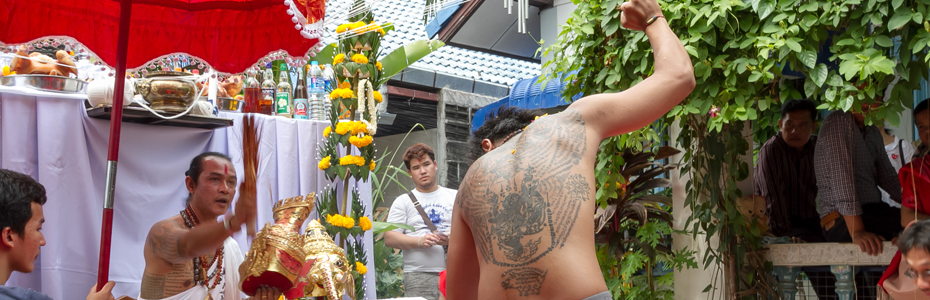
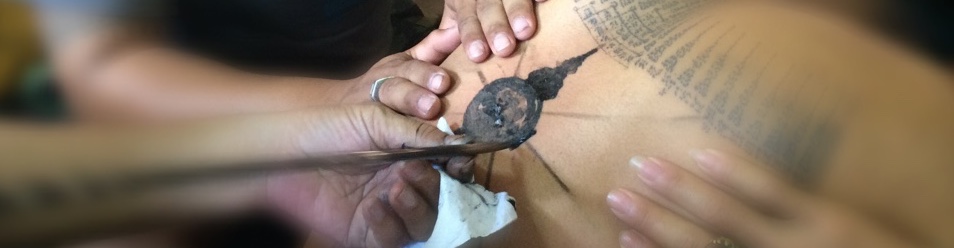
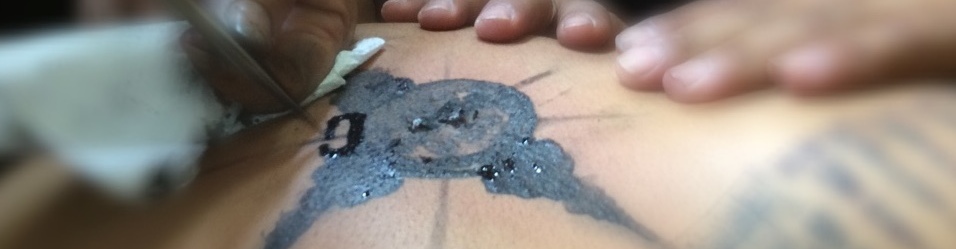
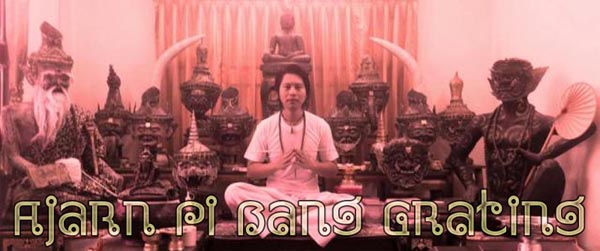
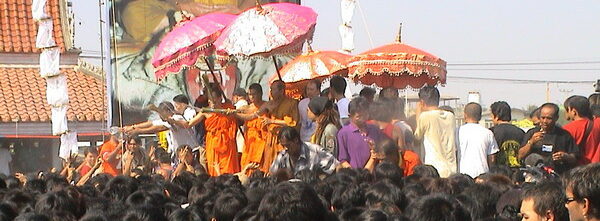
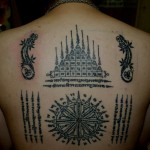
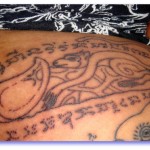
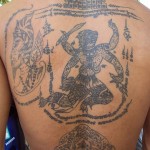
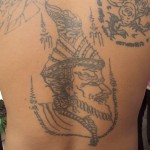
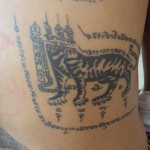
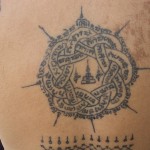
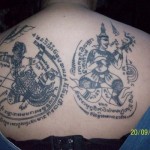
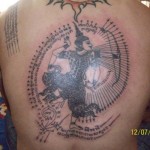
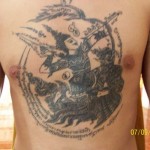
Sak Yant, a revered form of traditional Thai temple tattooing, is widely believed to bestow spiritual protection and potent metaphysical benefits upon its recipient. This sacred practice boasts a profound history, tracing its origins back over two millennia to the ancient Tai tribes. The intricate designs, frequently characterized by geometric patterns or zoo-morphic representations, are invariably complemented by inscriptions in Pali or Khom script, which are thought to imbue the wearer with auspicious attributes such as prosperity, charisma, or formidable strength.
Profound Spiritual Efficacy: Beyond mere aesthetic adornment, Sak Yant are regarded as conduits of mystical and spiritual energies. The intricate designs, coupled with accompanying incantations, are believed to confer profound blessings upon the individual adorned with them.
Adherence to Traditional Modalities: The meticulous application of Sak Yant is a deeply traditional undertaking, typically executed by venerable Buddhist monks or rigorously trained masters, ensuring the perpetuation of established rites and protocols.
Deliberate Design and Strategic Placement: The selection and strategic placement of each Sak Yant design are judiciously determined by the presiding master, often customized to align with the specific boons or protections sought by the individual. Furthermore, the master may impart guidance on the appropriate aftercare and maintenance of the tattoo, as highlighted by All Day Tattoo.
Ritualistic Consecration and Incantation: Integral to the process, the master customarily performs a consecration ritual and recites sacred chants contemporaneously with the application of the tattoo, thereby augmenting its spiritual potency.
Ethical Considerations and Practical Adornment: It is imperative to acknowledge that certain monastic orders may observe proscriptions regarding the tattooing of women, while others implement protective measures to facilitate the practice ethically.
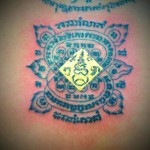
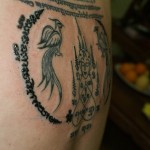
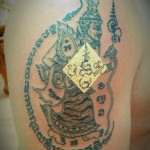
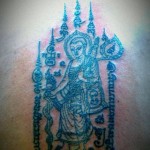
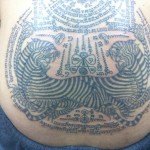
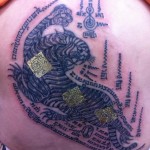
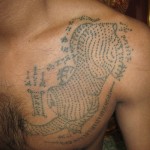
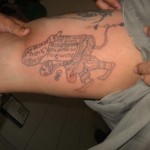
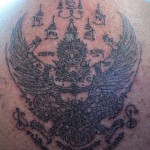
Diverse Iconographic Repertoire: The extensive lexicon of Sak Yant designs encompasses a rich array of symbols, geometric configurations, animal depictions, and divine effigies, each imbued with unique semantic and teleological significance.
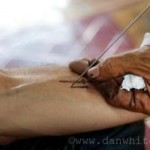
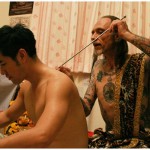
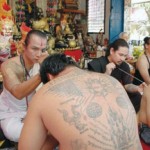
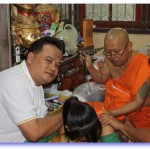
Prescribed Rituals and Observances: Prior to and subsequent to receiving a Sak Yant, adherents are often expected to engage in specific rituals and protocols, such as rendering obeisance to the monk and tendering a modest offering or donation. Sak Yant Thai Temple Tattoos, are made by Buddhist Monks, Brahman Masters and Ruesi ascetics. A place where Sak Yant is made, is called a Samnak Sak Yant (if a temple or a very large establishment), or “Dtamnak” (if a smaller establishment with one Master). Sak-Yant dot com presents a compendium of knowledge, info and galleries about Sak Yant Thai Buddhist/Animist temple tattoos, Saiyasart (Thai Occultism) , Kata (mantras), and Sacred Magical Buddhist Amulets.
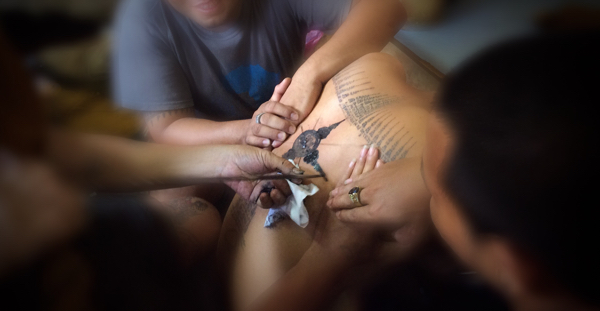
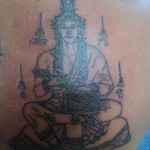
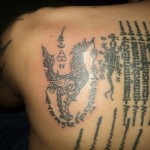
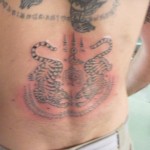
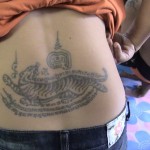
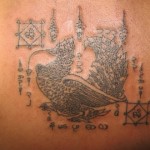
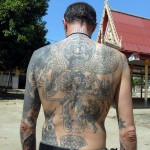
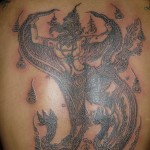
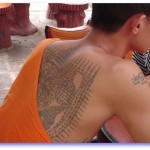
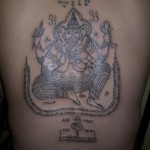
Above; Sak Yant Paed Tidt by Luang Pi Pant – Wat Ko Poon 2014
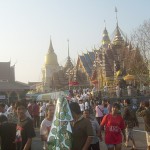
Sak Yant (Yantra Tattooing) is now an International Phenomenon, with hundreds of Samnak Sak Yant around South-East Asia, and even in Western Countries. However, to preserve the roots and tradition and to recognize the cause of this massive phenomenon known as Sak Yant Thai Temple Tattoos, we should pay respect to the source of the increase in popularity on a massive scale, namely, by recognizing the greatest of all Sak Yant Masters of Historical fame; Luang Por Phern Tidtakuno, and the Sak Yant Monks of Wat bang Pra, in Nakorn Pathom Province.
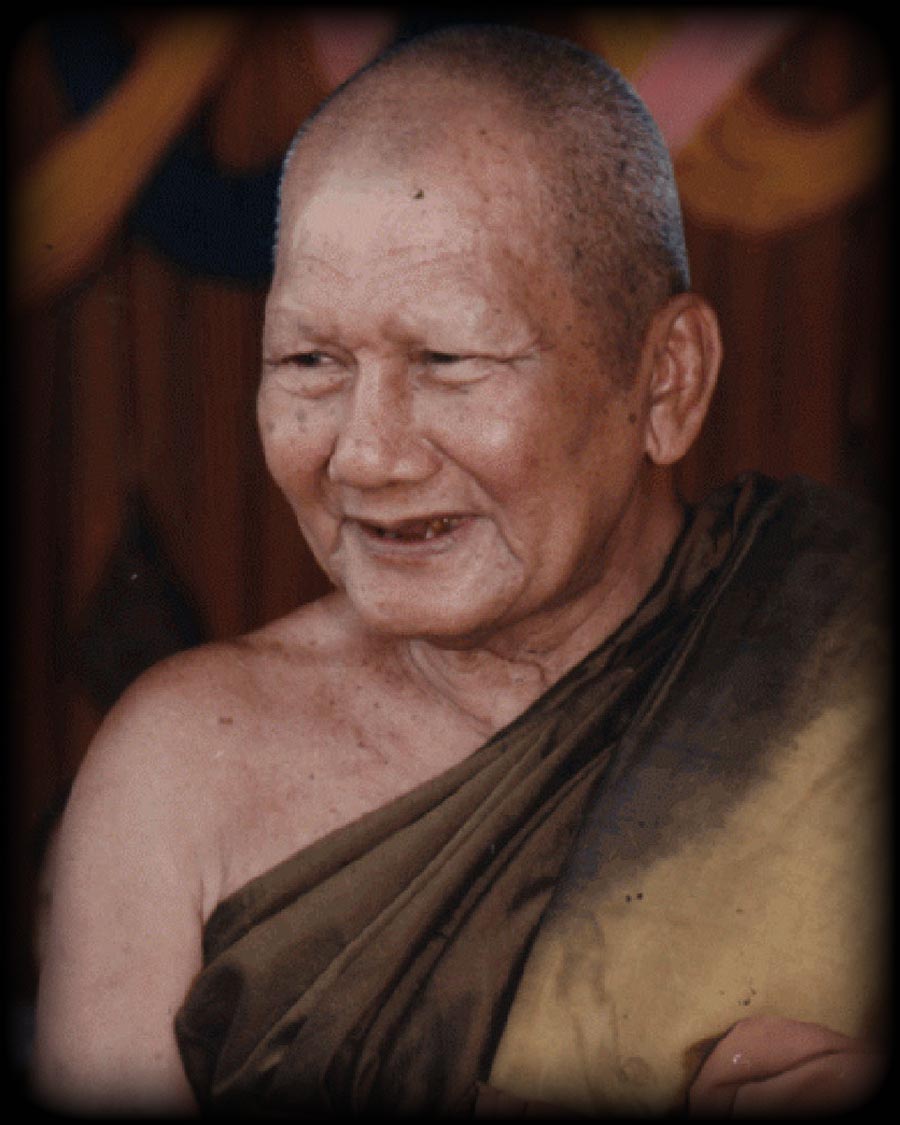
As is only fitting for those interested in learning about Sak Yant, we would like to draw your attention to Luang Por Phern Tidtakuno (Wat Bang Pra) – We would like to pay Respects and Devotion, to the Great Master, without whom, most Sak Yant Masters of the present day, would not enjoy the fame and success which they do, for if it was not for Luang Por Phern, it is doubtfuil that Sak Yant would have experienced such a Popular and International Revival – for it is true that in the 1980s and 90s, Sak Yant was almost an exclusively Thai phenomenon with only some extreme or niche interest people (such as Muay Thai Fighters, and certain Devotees from South east asia, who travelled there, in the days before the place became such an Internationally famous tattoo temple.
Luang Por Phern Tidtakunoe is the Beloved Guru of hundreds of Sak Yant Masters and Hundreds of Thousands (if not Millions) of Devotees, who believe in his great Purity and Kindness, and Power of Wicha Sak Yant. Since his passing, the Wicha has been passed on to a few Masters from Luang Por Phern himself, but there are a large number of Masters who claim his lineage but who have not recieved any true Transmission of Wicha from or through the Master Lineage Transmission of Luang Por Phern. Not all Masters are direct Lineage Transmission, with many of the newer and younger Sak Yant makers having arrived after the passing of Luang Por Phern, and hence do not possess direct transmission, as do some of the older Masters who were directly practicing under the surveillance and supervision of Luang Por Phern.
One direct Lineage Master who is a First Looksit (first generation apprentice) and directly recieved the Wicha from Luang Por Phern in person, is of course his Top Disciple ‘Luang Pi Pant’ who is also now now Grand Master of the Lineage of Luang Por Phern as far as Sak Yant is concerned.
Despite being the Current Lineage Transmission Holder of Wicha Sak Yant of Luang Por Phern, Luang Pi Pant is no longer resident at wat Bang Pra (he did not wish to remain after the passing of his Beloved Master), and is now at Wat Ko Poon in Singhburi. He now continues the Luang Por Phern Sak Yant Tradition at Wat Ko Poon.
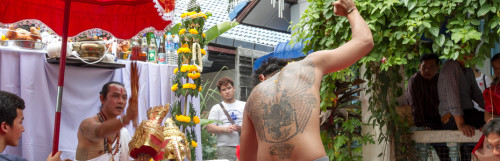
Another Master of the Non-Ordained Type, who is considered direct Initiation Lineage Master, is Ajarn Ord of Kalasin, who remains practicing after the passing of his Kroo Ba Ajarn Ajarn Bunmee, who was a very close apprentice to Luang Por Phern.
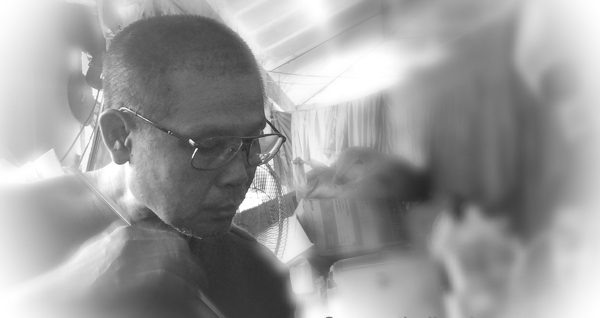
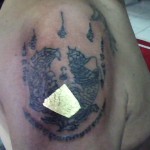
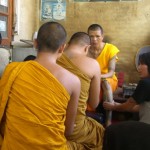
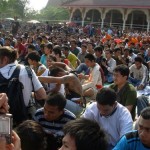
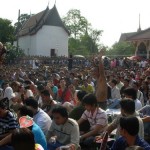
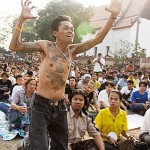
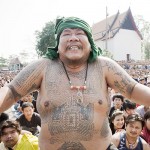
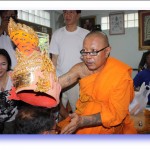
Below; Luang Pi Pant – Wat Ko Poon Luang Pi Pant – Sak Yant Master of Wat Ko Poon, and Original Lineage Master of Wat Bang Pra, through direct transmission from Luang Por Phern.
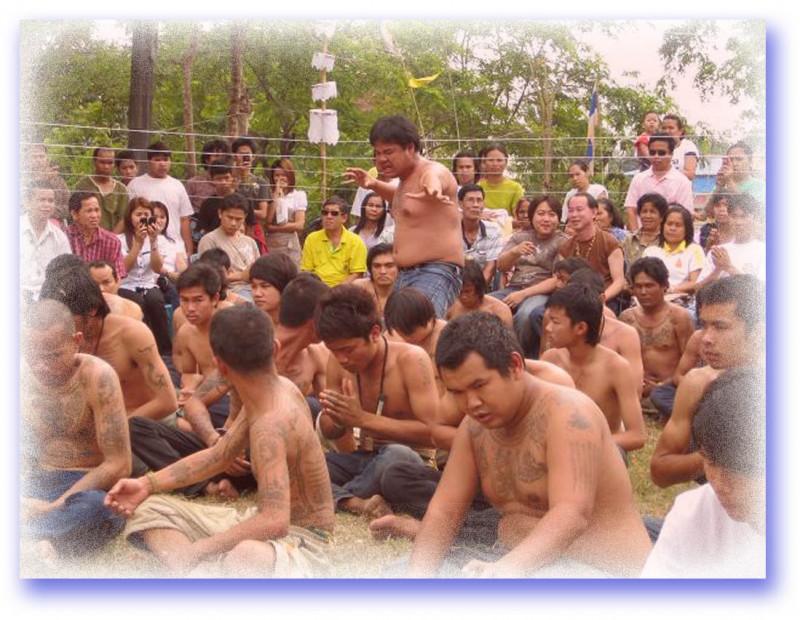
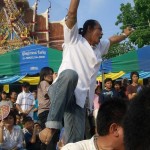
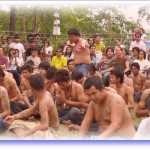
Above; Wan Wai Kroo (Master Day) from Samnak Ajarn Ord (Kalasin)
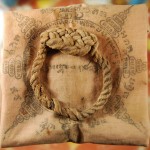
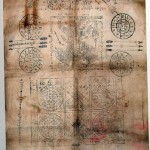
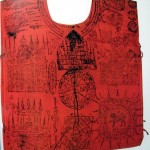
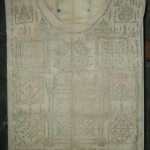
Sak Yant is just one single medium for the application of Thai sacred Geometry, which is also applied to metal plate and scrolls (Takrut) and cloth and clothing (Pha Yant and Suea Yant), as well as invisible inscription, upon peoples heads using magical instruments.
There is a large number of pages and blog articles, as well as image galleries for you to gather info about Sak Yant Buddhist Tattoos and Buddha Magic (my term for all forms of Thai Mystical, Spiritual or Occult practice, be it Buddhist, Animist, or Brahman). To increase your knowledge i may suggest purchasing one or some of my E-Publications on Sak Yant, Sacred Amulets, and Buddha Magic in Thailand – all of my publications go through the thailand-amulets.net store secure https server a service offered by amazon.com’s ecwid project, which is accepted by and trusted with all major credit card companies. Instant download after payment completion is given through account login page, which you can see after signing up using the below store, or going to thailand-amulets.net. Both stores are the same store, so it does not matter which one you use to sign up with






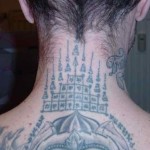
My Introduction to Sak Yant
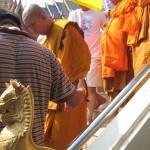
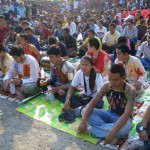
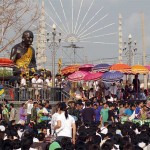
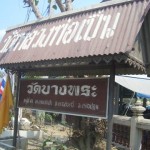
My engagement with Sak Yant, the traditional Thai sacred tattoo practice, began at Wat Bang Pra Temple. This location has long been, and remains, a central hub for these specific rites. Following this initial experience, I dedicated years to independent study and sought guidance from various specialists in the magical arts and Sak Yant practitioners. I also frequently retreated to temples within forested areas to deeply immerse myself in Buddhist philosophy and the practice of Dhamma. This period, characterized by its profound challenges and frustrations, ultimately proved to be the most rewarding of my life.
This journey led me to a singular objective: to discover methods that allow people of all faiths and philosophies to understand the Dhamma and achieve awakening, much like the Buddha did. My secondary goal, while I’m still alive, is to gather and preserve as much information as possible about the diverse Wicha (bodies of magical knowledge) and magical practices in Thailand. I aim to make this information accessible to non-Thai speakers, enabling them to initiate and pursue further research into this captivating subject and the magical way of life it represents.
The Nature of Thai Magic
Sak Yant tattoos, which incorporate elements of Thai Buddhist, Animist, and Brahmanic traditions, are just one aspect of what’s often called Buddha Magic. Magical or miraculous energy can be transferred through many different forms, not just tattoos. This includes objects with sacred geometry, ancient spells in forgotten languages, amulets, and charms—the list of magical practices, spells, and items commonly used in Thailand is extensive. This contrasts sharply with the Western world, where the genuine presence or belief in magic is less prevalent. Here in Thailand, magic is a tangible, everyday reality; you can sense it.
I’ve only felt a similar level of magic, in India and Nepal. However, there’s a key difference: in India and Nepal, the magic felt like it was pervasive, almost in the air around me. In Thailand, you don’t perceive it in quite the same way. You realize its reality when you begin to have faith, and then you discover it from within yourself. This internal understanding is always superior to external knowledge because it comes from your own insights. Knowledge gained externally can never be a truly reliable article of faith, as it relies on the statements of others, which is essentially blind faith.
The Buddha warned against blind faith, stating that we should never believe anything, even if it’s in an ancient text or spoken by a great master. Instead, belief should only be given if something makes sense and is truthful.
Understanding the Unseen
If the concept of magic doesn’t seem logical to you, that’s understandable; it doesn’t operate on conventional logic. If you haven’t practiced Dhyana meditation and achieved the “formless states” of mind, the mechanisms of magic may not appear clear or probable. This doesn’t mean you shouldn’t believe. It means you need to cultivate the capacity to sense and perceive these magical forces, and if possible, to reach that state. Only then will you truly know for yourself whether it’s real.
How Sak Yant first Entered my Life
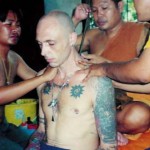 The Story of Sak Yant as far as my Journey was concerned, began at what is perhaps nowadays and also back then the ‘Mecca’ of Sak Yant; Wat Bang Pra Temple
After this, i was led to years of self study and conference with various Masters of the Magical Arts and Sak Yant Masters, as well as having regular bouts of disappearance to the forest to hang out in temples and learn what Buddhism and the Dhamma practice was really about, which led to be the most frustrating, difficult, and rewarding experience of my whole life. This resulted in me becoming completely dedicated to the single goal of finding a way for people of all religions and philosophies to find the way to see the Dhamma and awaken, as did the Buddha. My secondary goal whilst waiting to die, is to collect and preserve as much information about the various Wicha and Magical arts in Thailand as i can for those who do not speak Thai to be able to begin and continue further research in this most fascinating subject and indeed way of life that is so full of Magic.
Sak Yant Thai Buddhist (and Animist/Brahman) tattoos are one of the many facets of Buddha Magic, but only one. There are many mediums for the application of Magical or Miraculous energy,be it tattoos or other surfaces with sacred geometry, or ancient spells in forgotten languages, amulets and charms.. the list is almost endless of the variety of magical practices, spells and paraphernalia which are in current everyday common use in Thailand, when those in the Western World live in an Environment almost Devoid of the true presence of Magic, or the belief in it. Whereas here, Magic is alive and in your face every day, and you can feel it.
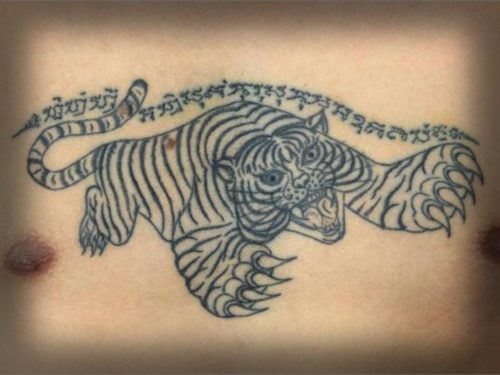
I. Introduction: The Enduring Legacy of Wicha Sak Yant Wicha Sak Yant (วิขา สักยันต์), a revered form of traditional tattooing prevalent across Southeast Asia, transcends mere aesthetic adornment to function...
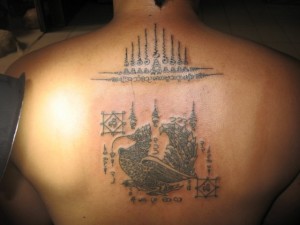
Yant Gao Yord (ยันต์เก้ายอด): The Quintessence of Sacred Protection As an individual deeply immersed in the esoteric traditions of Southeast Asia, particularly the intricate world of Sak Yant, I can...
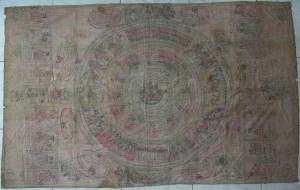
Pha Yant means ‘cloth Yantra’ and is even more widespread with Thai Buddhist people than Sak Yant Thai Temple Tattoos, and has an even larger panntheon of Yantra, with designs...
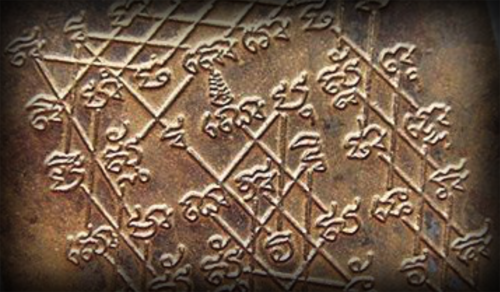
Yant Grao Paetch, or, as known in English Language; The Diamond Armour Yantra, is a very powerful Yantra with a rich heritage and history, which carries rules which must be...
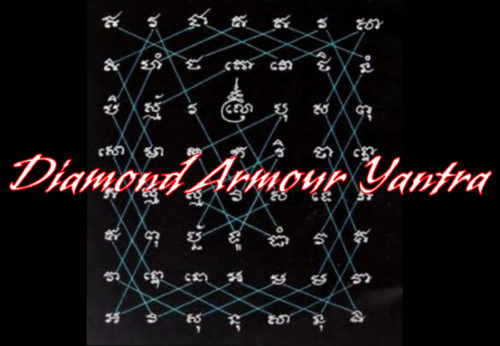
Buddha Magic Project has Published a new Tutorial of the Incantation for the Sacred Yant Grao Paetch (Diamond Armour) Yantra – used in Sak Yant Thai Temple Tattoos and Sacred Amulets....
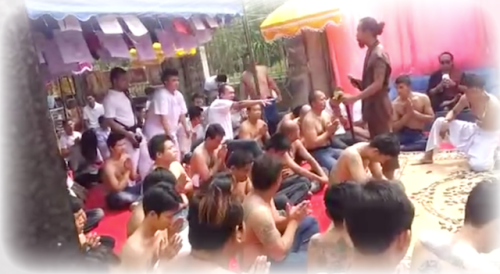
Specific Rules and Offerings differ with each Samnak Sak Yant – in this post, i shall present you with the necessary information for visiting the Samnak of Ajarn Ord, and...
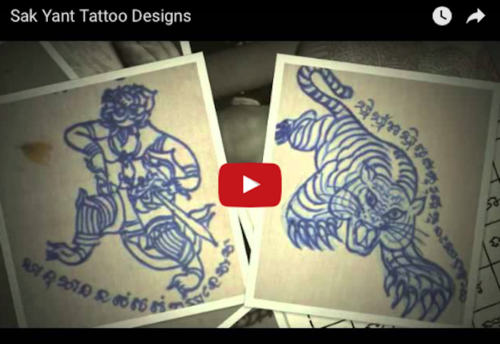
Sak Yant Tattoo designs Compendium – The first of a new ongoing series of video slideshows with Sak Yant Thai Temple Tattoos. This one is a visual slideshow without Narrative,...
A new video compilation of scenes of Khong Khuen Spirit Possession during the 2552 BE Wai Kroo Luang Por Phern Tidakuno (Wat Bang Pra) Master Day Ceremony, seven minutes long,...
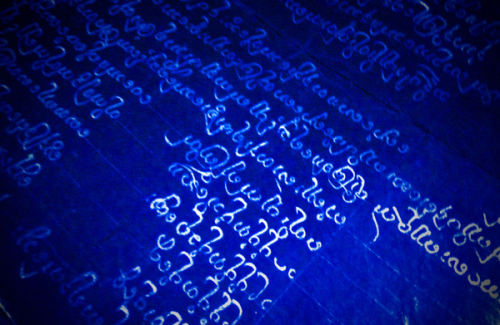
Khom School. Khom Sanskrit Lessons on Youtube for Free.
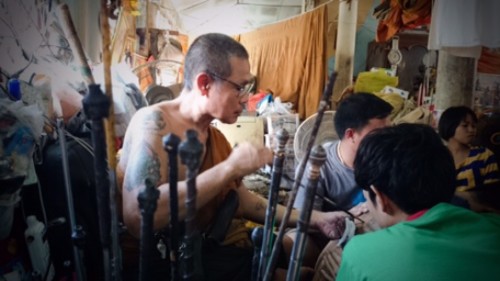
First video of the warmup early morning at Wat Kho Poon as the Wai Kroo to Luang Por Phern Tidakuno (Wat Bang Pra) and the Lersi was being prepared. This...
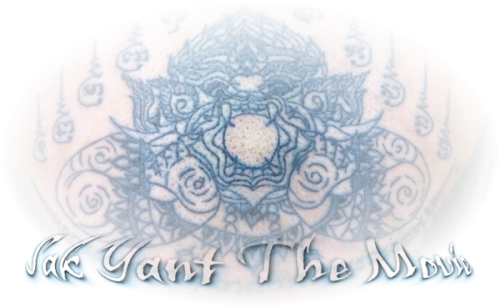
Hi to All friends and fans of Sak Yant Thai temple tattoos. I am now pleased to announce that I am currently completely absorbed in and, in the midst of...
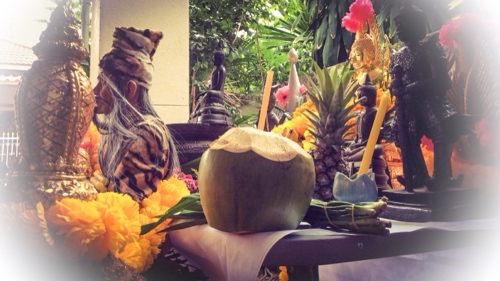
A little look into the Personal Private Wai Kroo ceremony, which I celebrated at my home ashram on 6 March 2557. All people who receive Sak Yant tattoos, as well as devotees of the Lersi Hermit Gods and Occult Sorcery, must according to tradition receive the laying on of the Lersi Khone Mask (Siarn Kroo), and attend or perform the Mass today ceremony which is known in Thai language as 'Wai Kroo'.
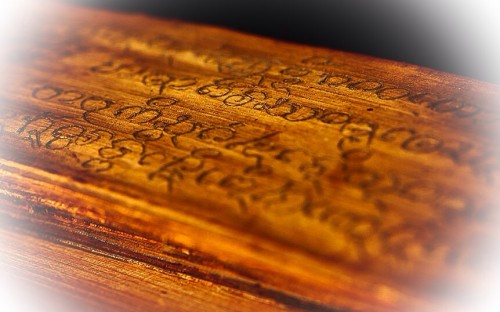
A small preview of some of the video documentation I am preparing for releasing as a full feature length documentary. This is still in prototype form and hopes to receive much more polish by the time I produce the final product
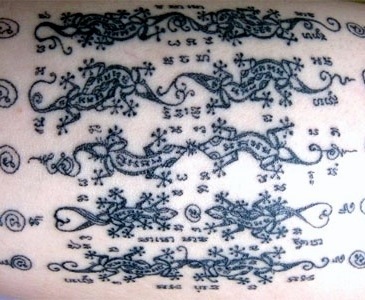
Enjoy a collection of different sak yant tattoos made by Ajarn Lek of Wat Thung Sethee. I do not know this master but I do know this temple, The abbot...

Buddhist Amulet - Thai Buddhist Amulet Store
Buddha Magic